
- Points Based
- Most people below the age of 51 years old, with an occupation (listed on each country’s list), 2+ years of work experience & good English / French are eligible for this
- It is the most popular way of settling overseas
- Similar to skilled immigration
- Occupation must be listed on the state list
- Long term visa converted to PR & citizenship
- Very popular option for most countries
- Candidates who find a full time job & an employer overseas are eligible for this visa
- test
Y-Axis offers job search services to help candidates market themselves to overseas employers. We have a high success rate & have been very successful with this. For more information, please click here.
- Some countries offer permanent residency anyone who has a parent, brother, sister, uncle, aunt or first cousin overseas
- The sponsoring relative needs to be an citizen or a permanent resident of that country
- test
- Many countries offer a temporary or PR visa in exchange for an investment
- Investment amounts can range from $50,000 to $500,000 or more




Study in Europe for Free, Free education in Europe for Indian students, Tuition-free universities in Europe, Study abroad Europe no tuition fees, Free universities Europe for international students, Europe student visa free education, Scholarships to study in Europe free, Free masters programs Europe, Study in Germany for free, Affordable study destinations Europe, Zero tuition fee universities Europe
Study in Europe for free with details on tuition-free countries, top universities, eligibility requirements, scholarships, and student visa information.
Study in Europe for Free: Countries, Universities, Eligibility & How to Apply
Europe is one of the few regions in the world where international students can study at top universities with little or no tuition fees. Many European countries such as Germany, Norway, Finland, and Austria offer free or low-cost education at public universities, even for international students. Because of this, Europe has become a more affordable option compared to expensive study destinations like the USA, UK, and Australia.
Every year, more than 1.33 million international students choose to study in Europe. Many students prefer countries with low or zero tuition fees because it helps reduce the cost of studying abroad. In 2025, over 50,000 Indian students were studying in Europe. Among them, Germany hosted around 59,000 Indian students, the highest in Europe, mainly because public universities there do not charge tuition fees.
Studying in Europe for free does not mean lower quality education. Many European universities are ranked among the top universities in the world. Students can access modern research facilities, internship opportunities, and strong connections with global companies while receiving a high-quality education without paying very high tuition fees.
*Want to study in Europe? Contact Y-Axis for end-to-end support
Why Study in Europe for Free?
Studying for free in Europe allows students to get a high-quality education without spending too much money, unlike studying in countries like the USA or Australia.
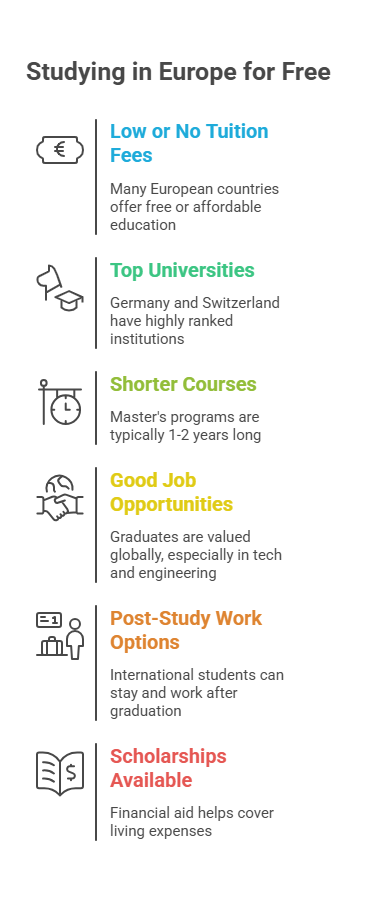
- Low or No Tuition Fees: Many European countries do not charge tuition fees at public universities, or the fees are very low for both EU and international students, including Indians.
- Top Universities: Countries like Germany and Switzerland have many well-known universities that are highly ranked in fields such as engineering, technology, and science.
- Shorter Courses: Most Master’s programs in Europe take 1 to 2 years, which helps students save money on tuition and living costs.
- Good Job Opportunities: Graduates from European universities are valued by employers around the world, especially in fields like technology, engineering, finance, and healthcare.
- Post-Study Work Options: Many European countries allow international students to stay and work after graduation, helping them gain experience and manage their expenses.
- Scholarships Available: Many governments and universities offer scholarships to help cover living expenses, making studying in Europe even more affordable.
Best Places in Europe to Study with Low or No Tuition Fees
Germany
Germany is the one of the top country in Europe for students who want to study for free. Public universities in Germany do not charge tuition fees for most undergraduate and master’s programs, no matter which country the student comes from. Students only need to pay a small semester fee of about €300, which often includes a public transport pass.
- Most public universities do not charge tuition fees for international students
- Students pay a small semester fee of around €300
- Indian students are the largest group, with about 59,000 students in 2024/25
- Strong courses in engineering, computer science, data science, and automotive technology
- Students can stay in Germany for up to 18 months after graduation to look for a job
*Want to study in Germany? Y-Axis is here to provide complete assistance!
Norway
Norway also offers free education at public universities for students from all countries, including those outside the EU. The country is well known for its programs in marine technology, renewable energy, and social sciences.
- No tuition fees at public universities for international students
- Students only pay a small semester fee of about €30–€60
- Strong courses in engineering, marine technology, and sustainability
- High quality of life and a very safe environment for students
- Work opportunities are available after graduation for international students
*Willing to study in Norway? Y-Axis is here to provide personalized guidance!
Finland
Finland offers free education at public universities for EU/EEA students. Non-EU students including Indians pay tuition fees, but a large number of government-funded scholarships are available that cover full tuition and living costs, effectively making education free for many international students.
- Free tuition for EU/EEA students; scholarships available to cover fees for non-EU students
- Strong programs in technology, education, design, and business
- Home to the University of Helsinki and Aalto University
- Internationally respected education system with strong research focus
- Post-study work visa available after graduation
*Willing to study in Finland? Y-Axis is here to provide personalized guidance!
Austria
Austria offers low-cost education at public universities for international students. Tuition fees are minimal compared to other Western European countries, and several universities offer fully funded scholarships that eliminate costs entirely.
- Low tuition fees of approximately €726 per semester at public universities
- Several scholarships available that provide full tuition waivers
- Strong programs in music, arts, engineering, and social sciences
- Home to the University of Vienna, one of Europe's oldest universities
- Central European location with easy access to neighboring countries
*Read more...
Austria Opens Doors for Indian Engineering Students with New Student Visa Partnership
Czech Republic
The Czech Republic offers free education in Czech-language programs at public universities. English-taught programs carry fees, but they remain among the most affordable in Europe.
- Free tuition for programs taught in Czech language
- English-taught programs available from as low as €2,000–€4,000 per year
- Home to Charles University, one of the oldest universities in Europe
- Affordable cost of living compared to Western Europe
- Post-study work options available after graduation
*Also Read....
75% of Intl students in Czech Republic study for free!
France
France offers very affordable tuition at public universities, with fees starting as low as €170 per year for Master's programs effectively among the lowest in Europe. The country is also investing heavily in attracting international STEM talent.
- Public university tuition as low as €170 per year for Master's programs
- Strong programs in engineering, data science, business, and applied sciences
- Home to Polytechnic School and PSL University, ranked among the world's best
- Indian Master's graduates can apply for a 1-year APS post-study work visa
- About 16% of all international higher-education students in the EU study in France
*Want to study in France? Y-Axis is here for end-to-end assistance!
Top Universities in Europe with Low Tuition Fees
Europe has many universities that offer high-quality education at very low or no tuition fees. Many public universities in countries such as Germany, Norway, Finland, Austria, France, and the Czech Republic keep tuition fees affordable for international students. In some cases, students only need to pay a small semester fee or administrative charge instead of full tuition.
Even with low fees, many of these universities are ranked among the top universities in the world and are known for strong programs in fields like engineering, technology, science, business, and social sciences. This allows international students to receive a globally recognised degree while keeping education costs manageable.
The table below lists some of the top universities in Europe that offer free or low-cost education for international students.
|
University |
Country |
Tuition Fee |
QS World Ranking |
|
Germany |
Free (€300 semester fee) |
22 |
|
|
Germany |
Free (€300 semester fee) |
58 |
|
|
Norway |
Free (€30–60 semester fee) |
119 |
|
|
University of Helsinki |
Finland |
Free for EU; scholarships for non-EU |
116 |
|
University of Vienna |
Austria |
€726/semester |
152 |
|
Germany |
Free (€300 semester fee) |
105 |
|
|
Charles University Prague |
Czech Republic |
Free (Czech-language programs) |
265 |
|
France |
€170–€380/year |
28 |
|
|
Sorbonne University |
France |
€170–€380/year |
72 |
|
Germany |
Free (€300 semester fee) |
130 |
Read more....
Most affordable Universities in Europe
Cost of Living in Europe for International Students
Although many European countries offer free or low-cost education, students must still plan for their monthly living expenses. The cost of living in Europe can vary depending on the country and city you choose.
Major cities such as Paris, Berlin, and Amsterdam usually have higher living costs, while smaller cities and university towns are more affordable for students. On average, international students may spend €700 to €1,500 per month on accommodation, food, transport, and other daily expenses.
Students can also reduce their expenses by living in shared accommodation, using public transport, cooking at home, and taking advantage of student discounts offered by many universities and local services.
The table below shows the average monthly living expenses for international students in Europe.
|
Expense Category |
Average Cost (EUR) |
Key Considerations |
|
Accommodation (Shared) |
€300–€700 (₹27,000–₹63,000) |
Cost depends on the city; university dormitories are usually cheaper |
|
Food & Groceries |
€150–€300 (₹13,500–₹27,000) |
Cooking at home can significantly reduce expenses |
|
Public Transport |
€30–€90 (₹2,700–₹8,100) |
Many cities offer student discounts on transport passes |
|
Health Insurance |
€50–€150 (₹4,500–₹13,500) |
Mandatory for international students in most European countries |
|
Internet & Utilities |
€50–€100 (₹4,500–₹9,000) |
Sometimes included in rental agreements |
|
Entertainment & Miscellaneous |
€100–€250 (₹9,000–₹22,500) |
Depends on personal lifestyle and spending habits |
Fully Funded Scholarships to Study in Europe for Free
Even though many European universities offer free or low tuition fees, students still need to cover living expenses such as accommodation, food, travel, and health insurance. To support international students, many governments and universities in Europe offer scholarships that help reduce these costs.
These scholarships can cover tuition fees, monthly living expenses, travel costs, and health insurance, making it possible for students to study in Europe with very little personal expense. The table below lists some of the popular scholarships that help international students study in Europe for free or at a very low cost.
|
Scholarship |
Benefits |
|
DAAD Scholarship (Germany) |
Monthly stipend + travel support + health insurance |
|
Norwegian Government Scholarship |
Living allowance + travel grant |
|
Finnish Government Scholarship |
Tuition waiver (where applicable) + monthly allowance |
|
Erasmus Mundus Scholarship |
Full tuition + living expenses across multiple EU countries |
|
French Government Eiffel Excellence Scholarship |
Monthly stipend + accommodation support |
|
Austrian Government Scholarship |
Monthly stipend + tuition support |
|
CEEPUS Scholarship (Central Europe) |
Tuition waiver + monthly allowance for Czech Republic and Austria |
|
Swedish Institute Scholarship |
Tuition fees + monthly allowance + travel grant |
*Read more.....
Top Scholarships for Indian Students to Study in Europe
Eligibility Requirements to Study for Free in Europe
The eligibility requirements for free or low-cost programs in Europe are similar to standard Masters admissions, with a few additional points to note.
Academic Requirements Students must have completed a bachelor's degree from a recognized university. Most tuition-free universities in Germany, Norway, and Finland require a strong academic record, typically equivalent to a first or upper second-class degree.
Language Requirements Free programs taught in the local language (German, Norwegian, Finnish) require proficiency in that language, usually at B2 or C1 level. For English-taught free programs, universities accept IELTS, TOEFL, or PTE Academic scores.
Work Experience Most tuition-free programs do not require prior work experience. Business and management programs may prefer candidates with 1 to 2 years of relevant experience.
Documents Required
- Academic transcripts and certificates from previous education
- Updated CV or resume
- Statement of Purpose (SOP) explaining career goals and reason for choosing the program
- Letters of Recommendation (LOR) from professors or employers
- Valid passport
- Proof of language proficiency (IELTS, TOEFL, or local language certificate)
- Research proposal (for research-based programs)
Step-by-Step Application Process for Free Education in Europe
Step 1: Choose the country, university, and Master’s program that matches your field of study and offers free or low tuition fees.
Step 2: Check the eligibility requirements and prepare for required language tests such as IELTS, TOEFL, or German/Norwegian language exams if needed.
Step 3: Prepare important application documents like your Statement of Purpose (SOP), CV or resume, and recommendation letters.
Step 4: Submit your application through the university’s official website or the online application portal.
Step 5: Wait for the result and receive the admission or offer letter from the university if your application is accepted.
Step 6: Apply for scholarships or financial support to help cover your living expenses while studying.
Step 7: Arrange proof of funds and apply for a student visa for the country where you will study.
Step 8: After getting your visa, plan your travel and arrange accommodation before moving to Europe.
How Can Y-Axis Help You?
Y-Axis provides complete guidance for students who want to study in Europe for free.
- Free counselling on tuition-free universities and program selection
- Assistance with Masters admissions and applications
- Y-Path gives the best suitable ideas about your study and career options
- Coaching services for IELTS, TOEFL, and German language preparation
- Scholarship application support to cover living costs
- Student visa application support
- Pre-departure and accommodation assistance