
- Renowned Universities
- Study Scholarships and Tuition Fee waivers
- Many job opportunities
- Multicultural environment
- Cost-effective education
Age limit:
- A student must be at least 18 years old.
Educational Qualification:
- A graduate degree or equivalent with at least 50% above from a recognized board.
Standardized test scores:
- GMAT, GRE, or LSAT
English language test scores:
- IELTS, TOEFL, or Others
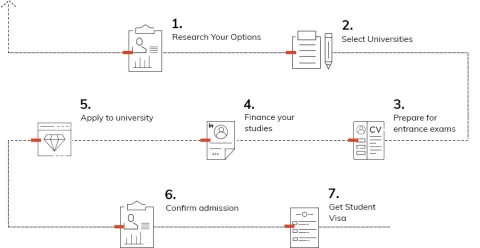
You will generally need the following for your Europe Student Visa application.
average fees
€6,000–€25,000 per year
€8,000–€30,000 per year
€10,000–€45,000 per year
August to December
December to January
May to August
Student Applicant
- Non-EU students can work 20 hours during their semester and 40 hours during their holidays. Many European countries allow students to work part-time during their studies.
Spouse
- European countries offer the same rights to spouses of international students. They are allowed to work to support the family.
Universities
University of Cambridge
University of Oxford
Imperial College London
ETH Zurich
UCL
University of Edinburgh
Université PSL
University of Manchester
EPFL
Technical University of Munich
King’s College London
London School of Economics and Political Science
LMU Munich
University of Bristol
Sorbonne University
KU Leuven
The University of Warwick
Université Paris-Saclay






Study in Europe, Study in Europe from India, Europe student visa, Study abroad Europe, European universities, Tuition fees in Europe, Masters in Europe, Europe scholarships for international students, Europe study visa requirements, Study in Europe universities, Europe student visa processing time
Study in Europe with details on top universities, courses, tuition fees, scholarships, eligibility, student visa process, and application steps.
Study in Europe: Top Countries, Universities, Courses, Fees & Scholarships
Study in Europe has become one of the most popular choices for international students, especially from India. Europe offers quality education, affordable tuition fees, and degrees that are recognized all over the world.
Today, more than 1.33 million international students choose Europe for higher education. In 2025 alone, around 50,000+ Indian students studied in different European countries. With 5,000+ universities across 44 countries, Europe gives students many options to select the right course and country based on their goals and budget.
One of the main reasons students choose Europe is its strong and well-organized education system under the European Higher Education Area (EHEA). This system makes it easy to recognize degrees and transfer credits from one European country to another. Many European countries also have low tuition fees, and there are several scholarships available for international students.
Apart from studies, students experience rich culture, different languages, beautiful landscapes, and global exposure. Universities provide access to modern libraries, research centers, computer labs, and advanced learning facilities that help students build strong academic and practical skills. With proper planning and the right guidance, studying in Europe can open doors to excellent career opportunities and international experience.
Why Study in Europe?
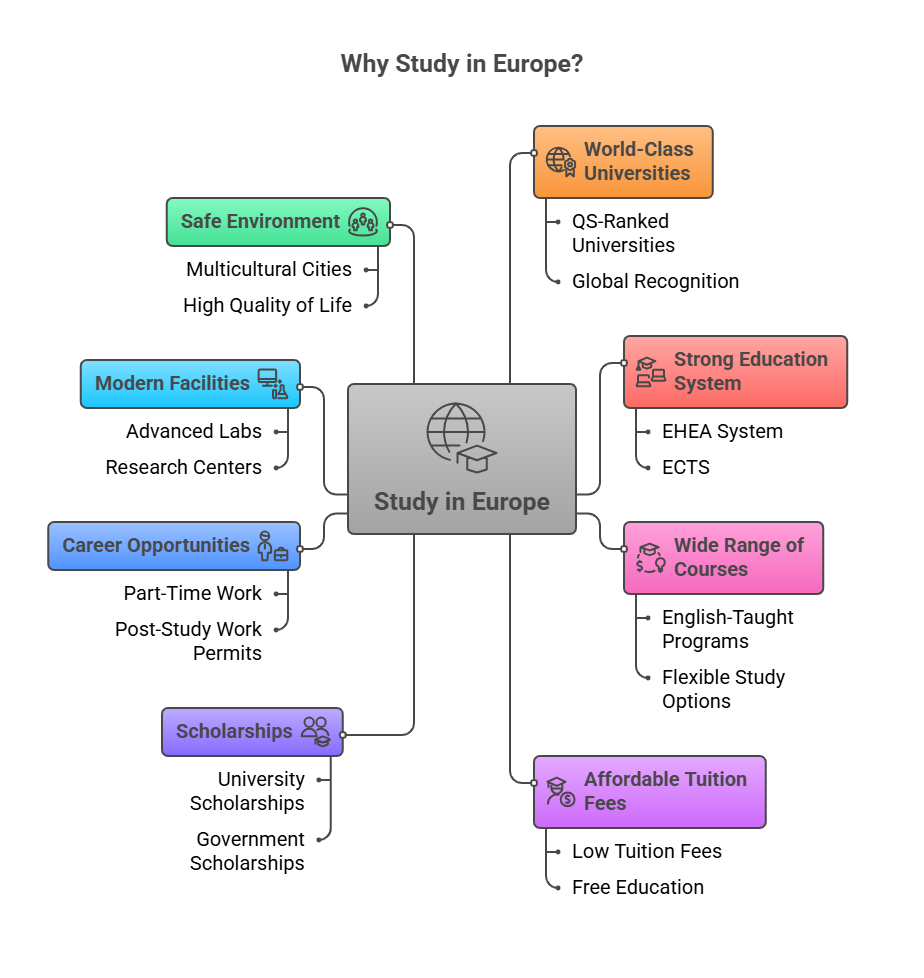
Studying in Europe gives students a strong academic foundation and a life-changing international experience. With high-quality universities, affordable education, scholarships, and good career opportunities, Europe continues to be a top choice for Indian and international students.
World-Class Universities and Global Recognition
Europe is home to many of the world’s oldest and top-ranked universities. There are 688 QS-ranked universities across countries like Germany, Ireland, France, Spain, Switzerland, and the UK. A degree from Europe is recognized worldwide and improves your chances of working in multinational companies or pursuing research.
Strong and Standardized Education System
Europe follows the European Higher Education Area (EHEA) system. This ensures high academic standards across countries. The ECTS (European Credit Transfer System) makes it easy to transfer credits and continue studies in another European country without confusion.
Wide Range of Courses and English-Taught Programs
Europe offers thousands of courses in fields like STEM, business, law, medicine, arts, and design. Many programs are taught in English, so language is not a barrier. Universities also offer flexible study options, including full-time and part-time learning.
Affordable Tuition Fees
Tuition fees in many European countries are affordable compared to other popular study destinations like the USA, UK, or Australia. On average, students may pay between €6,000 and €15,000 per year, depending on the country and course. In addition, some European countries offer free or very low-cost education at public universities, especially in countries like Germany and a few Nordic nations. In these cases, students may only need to pay a small semester or administrative fee. This makes Europe one of the most budget-friendly options for international students.
Scholarships and Financial Support
Many European universities and governments offer scholarships to support international students. These scholarships can range from €1,515 to €10,000, depending on the country, university, and course. Some scholarships cover part of the tuition fees, while others may also help with living expenses, travel costs, or study materials. This financial support reduces the overall cost of studying abroad and makes education in Europe more affordable for Indian and international students.
Part-Time Work and Post-Study Career Opportunities
Many European countries allow international students to work part-time while studying. This helps students earn extra income, manage their daily expenses, and gain valuable work experience. After completing their degree, some European countries offer up to 18 months of post-study work permits. This gives graduates enough time to search for a job, gain professional experience, and begin building their career abroad.
Modern Facilities and Research Opportunities
European universities provide access to modern libraries, advanced labs, research centers, and industry partnerships. Students get hands-on learning and internship opportunities in growing fields like AI, healthcare, climate studies, and engineering.
Safe and Multicultural Environment
Europe offers a safe and comfortable lifestyle. Students live in vibrant, well-connected cities with excellent public transportation and high quality of life. You also get the chance to meet people from different cultures, build international friendships, and grow personally and professionally.
*Want to study abroad? Contact Y-Axis for end-to-end support
Top Countries to Study in Europe
Europe has become one of the most preferred regions for higher education because it includes many countries that provide quality education, affordable tuition fees, and strong career opportunities. Each country has its own advantages, some are known for free or low-cost education, while others are famous for top-ranked universities, research facilities, and post-study work options.
Students from India and around the world choose European countries based on their budget, course preference, language comfort, and long-term career plans. Countries like Germany are popular for tuition-free public universities, France is known for business and management programs, the Netherlands offers many English-taught courses, Italy is famous for design and architecture, and Spain is preferred for affordable education and vibrant student life. Nordic countries such as Finland and Sweden are recognized for research, innovation, and high quality of life. Because of this wide variety of options, students can select a country that best matches their academic goals and financial plans while also gaining international exposure and global career opportunities.
Study in Germany
Germany is one of the most popular and trusted study destinations in Europe for international students. It is known for its high academic standards, strong economy, advanced technology, and excellent career opportunities. Students choose Germany not only for quality education but also for its affordable fee structure and global recognition of degrees.
- Public universities in Germany offer free or very low tuition fees for international students.
- Strong programs in engineering, IT, automobile, renewable energy, and business.
- Over 20,000+ study programs available.
- Excellent job market in cities like Berlin, Munich, and Frankfurt.
- Graduates can stay up to 18 months after studies to find a job.
*Want to study in Germany? Y-Axis is here to provide complete assistance!
Study in UK
The United Kingdom is one of the leading study destinations in Europe and has the highest number of globally top-ranked universities in the region. It is known for its strong academic reputation, high teaching standards, and internationally recognized degrees. Many of the world’s oldest and most prestigious universities are located in the UK, attracting students from across the globe.
- Home to the highest number of QS top-ranked universities in Europe.
- Strong programs in business, finance, law, medicine, engineering, data science, and humanities.
- Wide range of undergraduate, postgraduate, and research programs.
- Degrees are globally recognized and valued by employers worldwide.
- Opportunities for internships and placements through industry connections.
- Graduates can stay for up to 2 years after completing their degree to work in the UK.
The UK is an excellent choice for students who want world-class education, global exposure, and strong career opportunities.
*Want to study in the UK? Y-Axis is here to provide complete guidance!
Study in France
France is one of the leading study destinations in Europe, known for its globally respected education system, strong research standards, and rich cultural heritage. It attracts thousands of international students every year who want a combination of academic excellence and vibrant student life.
- Home to 3,500+ higher education institutions.
- Popular for business, management, arts, fashion, culinary studies, and engineering.
- Affordable tuition fees compared to many other countries.
- Post-study work visa available for up to 2 years for master’s students.
- Multicultural environment and strong research opportunities.
France offers both academic excellence and a vibrant lifestyle.
*Want to study in France? Y-Axis is here for end-to-end assistance!
Study in Netherlands
The Netherlands is a modern and innovative country that is highly popular among international students, especially those who prefer studying in English. It is known for its high teaching standards, practical learning approach, and strong global university rankings.
- 2,000+ programs taught in English.
- 9 Dutch universities ranked among the world’s top 200 (QS rankings).
- Strong courses in business, technology, social sciences, and engineering.
- 12-month post-study work visa (Orientation Year Visa).
- International and welcoming environment.
It is a great choice for students who prefer studying in English.
*Want to study in the Netherlands? Y-Axis is here to provide expert assistance!
Study in Italy
Italy is one of the leading European countries for higher education, known for its strong academic tradition, world-famous art and architecture, and rich cultural heritage. The country offers a balance of quality education and affordable living, making it a good option for international students. Italy is especially well known for courses connected to creativity, design, and humanities.
- Public university tuition fees range from €900 to €4,000 per year, making it affordable compared to many other European destinations.
- Strong programs in architecture, design, fashion, arts, and humanities, along with business and engineering.
- Affordable cost of living compared to many Western European countries.
- Students can stay up to 1 year after graduation to search for job opportunities.
- Cities like Milan and Rome are ranked among top student cities globally.
Italy is an excellent choice for students who want quality education along with cultural exposure and creative learning opportunities.
Want to study in Italy? Y-Axis is here to provide expert assistance!
Study in Spain
Spain is one of the preferred countries in Europe for international students because it combines affordable education with a lively and welcoming lifestyle. Spanish universities are known for maintaining good academic standards while offering a relaxed and friendly learning environment. Students benefit from modern campuses, experienced faculty, and a strong focus on practical knowledge.
Spain is also culturally rich, with historic cities, beautiful architecture, and diverse traditions. This makes student life enjoyable and memorable. Living expenses are generally lower than in many other Western European countries, which helps students manage their budget more easily.
- Tuition fees at public universities range from €750 to €2,500 per year.
- Strong programs in business, hospitality management, and social sciences.
- Cities like Madrid and Barcelona are ranked among top student cities.
- Lower cost of living compared to many other European countries.
Spain is a strong choice for students who want quality education along with an active and culturally vibrant lifestyle.
*Want to study in Spain? Y-Axis is here to provide complete assistance!
Study in Finland
Finland is widely respected for its high-quality education system, strong research focus, and modern teaching methods. Universities in Finland encourage independent thinking, problem-solving, and innovation rather than only focusing on exams and grades. This helps students develop practical skills that are useful in global careers.
The country is also known for its clean environment, safety, and excellent quality of life. Finnish universities provide modern labs, advanced research facilities, and strong academic support services. Many programs are taught in English, making it easier for international students to study comfortably.
Finland has a growing demand for skilled professionals, especially in technology and innovation sectors, which creates good career opportunities after graduation.
- Strong focus on technology, environmental sciences, and research-based programs.
- Many English-taught bachelor’s and master’s programs.
- Safe country with modern facilities and strong student support.
- Growing career opportunities in tech and innovation sectors.
Finland is well suited for students who are interested in research, innovation, and long-term global career growth.
*Willing to study in Finland? Y-Axis is here to provide personalized guidance!
Study in Sweden
Sweden is well known for its modern and innovative education system. Universities in Sweden focus on practical learning, group discussions, research, and real-world problem solving rather than only classroom lectures. Students are encouraged to think independently, share ideas, and work in teams, which helps them prepare for global careers.
Sweden is also a leader in technology, sustainability, and environmental studies. The country has strong connections between universities and industries, giving students access to internships and research opportunities. With a high quality of life, clean environment, and safe cities, Sweden provides a comfortable and supportive atmosphere for international students.
- Around 900+ programs available for international students.
- Strong in technology, sustainability, and innovation.
- 12-month post-study work opportunity.
- High quality of life and modern campuses.
Sweden is a great option for students who prefer research-based learning and innovation-focused education.
*Willing to study in Sweden? Y-Axis is here to provide personalized guidance!
Study in Denmark
Denmark offers a high standard of education with a strong focus on practical skills and independent thinking. Danish universities encourage open discussions, teamwork, and project-based learning, which helps students gain hands-on experience along with theoretical knowledge.
The country is known for being safe, organized, and student-friendly. Many programs are taught in English, making it easier for international students to adjust. Denmark also has a strong economy and growing industries in business, technology, and sustainability, which create good career opportunities.
- Many English-taught programs.
- Strong focus on business, technology, and sustainability.
- Safe country with a low crime rate.
- Offers post-study work opportunities.
Denmark is suitable for students looking for quality education, safety, and a well-balanced lifestyle.
*Willing to study in Denmark? Y-Axis is here to provide personalized guidance!
Study in Poland
Poland is becoming an attractive choice for international students who are looking for quality education at an affordable cost. The country has several recognized universities that maintain good academic standards and offer a wide range of programs.
Tuition fees and living expenses in Poland are generally lower than in many other European countries, which makes it budget-friendly. In recent years, more universities have started offering English-taught programs, making it easier for international students to study there.
Poland also provides growing job opportunities within Europe, especially for graduates in technical and business-related fields.
- Recognized universities with strong academic standards.
- Affordable tuition fees and living costs.
- Growing number of English-taught programs.
- Good career opportunities within Europe.
Poland is a practical option for students who want a European degree at a lower overall cost while still gaining good academic and career benefits.
*Willing to study in Poland? Y-Axis is here to guide you through the process!
Top Universities in Europe in 2026
Europe is home to some of the world’s highest-ranked and most respected universities. These institutions are known for academic excellence, advanced research facilities, experienced faculty, and strong global reputation. These universities are known for strong programs in engineering, science, medicine, business, humanities, and technology. Studying at any of these institutions can provide students with global recognition, research opportunities, and strong career prospects worldwide. Many of these universities consistently rank among the top in the QS World University Rankings 2026, attracting students from all over the world.
Below is a list of the Top 10 Universities in Europe in 2026, based on QS rankings:
|
Top European Universities |
QS World University Rankings 2026 |
University’s Home Country |
|
#2 |
UK |
|
|
#4 |
UK |
|
|
#6 |
UK |
|
|
ETH Zurich |
#7 |
Switzerland |
|
#9 |
UK |
|
|
EPFL |
#22 |
Switzerland |
|
#22 |
Germany |
|
|
#28 |
France |
|
|
#31 |
UK |
|
|
#34 |
UK |
|
|
#35 |
UK |
|
|
#41 |
France |
|
|
Delft University of Technology |
#47 |
Netherlands |
|
#51 |
UK |
Read more....
Most affordable Universities in Europe
Countries in Europe with Free or Low Tuition Fees
Many European countries offer university education at very low cost or even tuition-free options for international students. While some countries charge zero tuition, others require only small fees, making them some of the most affordable places in the world to study abroad.
Germany
Germany is one of the most affordable places to study in Europe. Most public universities do not charge tuition fees for both domestic and international students. Instead, students pay a small semester charge to cover administrative services like transport passes or student services. Even with living expenses, studying in Germany is very cost-effective. The country also offers strong education in engineering, science, business, and many other fields, making it a top choice for global students.
Norway
Norway offers tuition-free higher education at public universities to all students, regardless of nationality. This means international students can study without paying tuition fees, though they still need to cover living costs like accommodation and food. Norway is known for high living standards, safety, and quality teaching. It is a great option for students who want tuition-free education in Europe.
France
In France, public universities charge very low fees for international students — often just a small administrative contribution each year (around €170–€380). Even outside Paris, the cost of living is more affordable than in many other Western European countries. France has a long history of quality education and offers a variety of programs in fields like arts, business, science, engineering, and more. Many students also choose France to experience its culture, language, and lifestyle.
Finland
Finland offers tuition-free education for students from EU/EEA countries, and many non-EU students receive scholarships or tuition waivers that make studying affordable. Universities in Finland focus on research, technology, and innovation, and many programs are taught in English. Finland is also known for its safe cities, modern campuses, and strong support for international students.
Poland
Poland is one of the most budget-friendly study destinations in Europe. Tuition fees for English-taught programs are low compared to Western Europe, and in some local-language programs, tuition can be free. Living costs in cities like Warsaw and Krakow are generally lower than in countries like Germany or France. Poland has good academic quality, growing English-taught options, and a welcoming environment for international students who want quality education without high costs.
|
Country |
Annual Tuition Fees (Non-EU) |
Monthly Living Costs |
Proof of Funds (Visa) |
Post-Study Work Visa |
|
Germany |
Free to ~€3,000 (Semester fees only) |
€992 – €1,200 |
€11,904 (Blocked Account) |
18 months |
|
Norway |
€8,000 – €34,000 (Fees introduced in 2023) |
€1,000 – €1,400 |
~€14,000 – €16,000 |
1 year |
|
France |
€2,770 – €3,770 (Subsidised public uni) |
€600 – €900 |
~€7,380 (€615/month) |
1–2 years |
|
Finland |
€4,000 – €20,000 |
€700 – €1,200 |
~€9,600 (€800/month) |
2 years |
|
Poland |
€2,000 – €5,500 |
€450 – €800 |
~€4,500 – €6,000 |
9 months |
*Know more about....
Top 10 best European cities to study abroad
Top Courses and Programs in Europe
Europe offers a wide range of globally recognized courses that prepare students for strong international careers. Universities across countries like Germany, France, the UK, the Netherlands, Sweden, and Finland are known for high academic standards, research-based learning, and strong industry connections. Many programs are designed to match current global job market needs, especially in technology, healthcare, business, and sustainability.
Below are some of the top courses and programs in Europe that are in high demand for global careers in 2025 and beyond:
|
Course Name |
Top Programs / Specializations |
Top Universities in Europe |
|
Mechanical Engineering, Civil Engineering, Electrical Engineering, Automotive Engineering, Aerospace Engineering, Computer Science Engineering |
|
|
|
Data Science & Artificial Intelligence |
Data Science, Artificial Intelligence, Machine Learning, Data Engineering, Cybersecurity, Digital Business |
|
|
Business & Management |
MBA, International Business, Finance, Marketing, Accounting, Human Resource Management, Entrepreneurship |
|
|
Health & Medicine |
Medicine (MBBS), Nursing, Public Health, Biotechnology, Pharmacy, Psychology |
|
|
Environmental Science & Sustainability |
Environmental Science, Renewable Energy, Climate Change Studies, Sustainable Development, Green Technology |
|
|
Hospitality & Tourism Management |
Hospitality Management, Tourism Management, Event Management, Culinary Arts |
|
|
Law & International Relations |
International Law, EU Law, Human Rights Law, Political Science, International Relations |
|
|
Arts, Architecture & Design |
Architecture, Fashion Design, Graphic Design, Interior Design, Fine Arts, Humanities |
|
*Confused to choose which course to pursue? Avail Y-Axis course recommendation services to choose the best.
Eligibility Requirements to Study in Europe for Indian Students
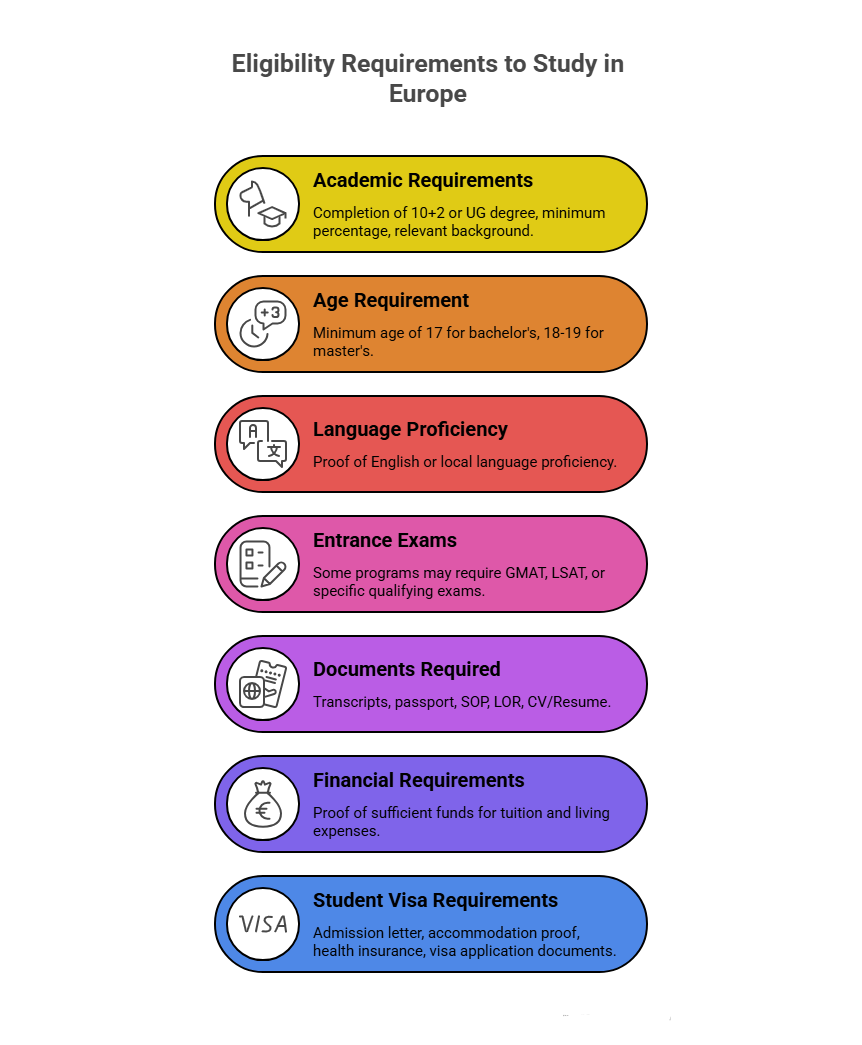
The eligibility criteria to study in Europe may vary depending on the country, university, and course. However, Indian students generally need to meet the following requirements:
Academic Requirements
- Completion of 10+2, higher secondary education from a recognized Indian board for bachelor’s programs.
- A recognized undergraduate (UG) degree for master’s programs.
- Minimum required academic percentage or CGPA (varies by university and course).
- Some programs may require a relevant academic background, for example, engineering for technical master programs.
Age Requirement
- Minimum age of 17 years for bachelor’s programs.
- Minimum age of 18–19 years for master’s programs (may vary by country).
Language Proficiency
- Proof of English language proficiency for English-taught programs like IELTS, TOEFL, or PTE scores.
- In some countries, proof of local language proficiency may be required if the course is taught in the native language.
Entrance Exams
- Some universities may require entrance exams depending on the course.
- Business programs may require GMAT.
- Law programs may require LSAT.
- Medical programs may require specific qualifying exams.
Documents Required
- Academic transcripts and certificates.
- Valid passport.
- Statement of Purpose (SOP).
- Letters of Recommendation (LOR), if required.
- Updated CV/Resume.
Financial Requirements
- Proof of sufficient funds to cover tuition fees and living expenses.
- Bank statements or blocked accounts depending on the country.
Student Visa Requirements
- Admission letter from a recognized European university.
- Proof of accommodation.
- Health insurance coverage.
- Visa application documents as per the specific country.
Step-by-Step Application Process to Study in Europe
Step 1: Choose Your Country and Course
Research different European countries and universities. Select the course and university that matches your academic background, career goals, and budget.
Step 2: Check Eligibility Requirements
Review the admission requirements for the course. This may include academic qualifications, English language test scores (IELTS/TOEFL), and other specific requirements depending on the program.
Step 3: Prepare the Required Documents
Collect all the necessary documents such as academic transcripts, passport copy, Statement of Purpose (SOP), Letters of Recommendation (LOR), CV, and English language test results.
Step 4: Apply to Universities
Submit your application through the university website or through centralized portals where applicable. Make sure you apply before the admission deadlines.
Step 5: Receive the Admission Letter
If your application is accepted, the university will issue an offer letter or admission letter confirming your seat in the program.
Step 6: Arrange Proof of Funds
Show proof that you have enough funds to cover tuition fees and living expenses. Some countries may require a blocked account or financial statement.
Step 7: Apply for a Student Visa
Once you receive the admission letter, apply for a student visa at the respective embassy or consulate. Submit your documents and attend the visa appointment if required.
Step 8: Prepare for Travel and Accommodation
After your visa is approved, book your flight tickets, arrange accommodation, and get ready to travel to Europe to start your studies.
Cost of Studying in Europe
The cost of studying in Europe depends on the country, university, course, and whether you are an EU/EEA or non-EU student such as Indian students. Some European countries offer subsidized or low-cost education at public universities, while others charge moderate tuition fees.
In many countries like Germany and some Nordic nations, public universities offer free or very low tuition fees, and students only pay a small semester or administrative fee. In other countries such as France, Spain, Italy, and the Netherlands, tuition fees are affordable compared to destinations like the USA, UK, or Australia.
Below is a general average of tuition fees for different programs:
|
Study Program |
Average Tuition Fees (Per Year) |
|
Bachelor’s Degree |
€3,000 – €15,000 per year (for non-EU students) |
|
Master’s Degree |
€4,000 – €20,000 per year (for non-EU students) |
Costs and Accommodation in Europe
For EU/EEA students, tuition fees are usually much lower and, in some countries, even free Countries like Germany, Poland, Spain, and Italy are generally more affordable in terms of both tuition and living costs, while countries like Switzerland and the UK may have higher overall expenses. Choosing the right country depends on your academic goals and financial plan. With proper guidance, students can find affordable universities, scholarship options, and cost-effective study destinations in Europe.
The cost of living in Europe for international students depends on certain factors like the country, the study program chosen, the University enrolled in, and lifestyle habits. The table below provides an approximate cost of living for international students in Europe:
|
Expenses |
Average Amount (in Euros) |
|
Tuition fee |
€2,000 - €20,000 per year |
|
Accommodation |
€300-€1200 per month |
|
Food |
€150-€300 per month |
|
Health Insurance |
€200-€1000 per year |
|
Others |
€150-€800 per month |
Top Scholarships in Europe for International Students
Europe offers many government-funded and university-funded scholarships to support international students, including Indian students. These scholarships can cover full tuition fees, living expenses, travel costs, or provide monthly stipends. Some are fully funded, while others offer partial financial support based on merit, leadership qualities, or academic excellence.
Below is a list of some of the most well-known and trusted scholarships available in Europe:
|
Name of Scholarship |
Typical Coverage / Benefit |
|
Erasmus Mundus Joint Master’s Scholarship |
Full tuition + travel + living allowance + insurance |
|
DAAD Scholarship (Germany) |
Monthly stipend (€934 for Master’s, approx. €1,200 for PhD) + insurance + travel support |
|
Full tuition + living expenses + airfare (approx. up to £30,000 total support) |
|
|
Swedish Institute Scholarship (Sweden) |
Full tuition + monthly stipend + travel grant + insurance |
|
Deutschlandstipendium (Germany) |
€300 per month |
|
Eiffel Excellence Scholarship (France) |
Monthly stipend + travel allowance (tuition usually not covered) |
|
VLIR-UOS Scholarship (Belgium) |
Full tuition + monthly allowance + travel costs |
|
ENS International Selection Scholarship (France) |
Monthly stipend + accommodation support |
|
Developing Solutions Scholarship (UK) |
Full or partial tuition fee support |
|
Holland Scholarship (Netherlands) |
€5,000 – €15,000 (one-time or partial tuition support) |
*Looking to scholarships? Y-Axis is here to help you find top scholarships to study abroad!
Post-Graduation Work Opportunities in Europe
Europe offers strong career opportunities for international students after completing their studies. The region has a large and stable job market, with around 18.8 million job opportunities across more than 20 different sectors, including technology, healthcare, engineering, finance, manufacturing, hospitality, and renewable energy.
Many European countries allow international graduates to stay back after completing their degree through post-study work permits. This gives students time to search for a job, attend interviews, and start their professional careers.
The average annual salary in Europe generally ranges between €40,000 and €48,000, depending on the country, industry, and level of experience. Salaries may be higher in fields such as IT, engineering, finance, and healthcare. With a strong economy, global companies, and growing industries, Europe provides international graduates with good career growth, international exposure, and long-term settlement opportunities in some countries.
Top 10 In-demand Jobs in Europe
For students graduating from European universities, choosing the right career path is very important. Europe has strong demand for skilled professionals in areas like technology, healthcare, engineering, finance, and education. Graduates with the right qualifications and practical skills can find good job opportunities with competitive salaries and long-term career growth.
Below is a list of some of the most in-demand jobs in Europe along with their average annual salary ranges:
|
Occupation |
Average Annual Salary |
|
STEM Professionals |
€ 1,35,000 |
|
Healthcare |
€ 1,20,000 |
|
IT and Software |
€ 1,10,000 |
|
Accounting and Finance |
€ 1,00,000 |
|
Nursing |
€ 1,00,000 |
|
Engineering |
€ 95,000 |
|
Teaching & Education |
€ 85,000 |
|
Human Resource Management |
€ 70,000 |
|
Hospitality |
€ 68,000 |
|
Sales & Marketing |
€ 66,028 |
Read more…
Most in-demand occupations in Europe
Post-graduation work visas in Europe
International students can apply for a work visa in Europe after receiving a valid job offer. Each European country has its own requirements and eligibility criteria for work visas. Some of the popular work visas in Europe, along with the cost of acquiring them, are listed in the table below:
|
Type of Work Visa |
Cost (in Euros) |
|
€ 75 |
|
|
€ 99 |
|
|
€ 80 |
|
|
€ 190 |
|
|
€ 690 |
|
|
€ 500 |
|
|
€ 120 |
|
|
€ 830 |
|
|
€ 80-€100 |
|
|
€ 180 |
|
|
€ 590 |
|
|
€ 350-€ 405 |
|
|
€ 80 |
|
|
€160-€200 |
|
|
€ 540-€690 |
*Want to apply for work visa? Contact Y-Axis for complete guidance
Build Your Future in Europe
Studying in Europe is a great choice for international students who want quality education and better career opportunities. Europe has many well-known universities, modern education systems, and a multicultural environment where students from different countries study together. By studying in Europe, students can gain international exposure, learn new skills, and build strong professional networks. It also opens the door to job opportunities in many industries across Europe. If you are looking for good education and long-term career growth, Europe can be a great place to start your journey and build a successful future.
How can Y-Axis help you?
Y-Axis, the world’s No.1 overseas immigration and student visa consultancy, can assist you by giving end-to-end support to aspirants who wish to study in Europe. The support process includes:
- Free Counselling: Free Counselling on university and course selection.
- Campus Ready Program: Fly to Europe with the best and ideal course.
- Y-Path gives the best suitable ideas about your study and career options.
- Europe Immigration: Our expert team helps you to migrate overseas.
- Y-Axis Overseas Careers Coaching services to improve your IELTS, TOEFL, PTE, or German language test scores.