Study or Work Abroad: Which Option is Better?
Studying abroad is usually the better option for freshers because it offers a smoother and more structured visa process. It gives you enough time to understand the country, build networks, and gain a degree that is recognized locally, which improves your job chances. On the other hand, working abroad is more suitable for experienced professionals, as it allows you to start earning immediately, grow your career faster, and in many cases, reach Permanent Residency (PR) quicker without spending money on education. The right choice depends on your experience, financial situation, and long-term goals.
Key Benefits of Study Abroad vs Work Abroad
Both studying and working abroad have their own advantages and challenges. Your choice should depend on your experience level, financial situation, and long-term goals. The table below gives a clear comparison to help you understand which option suits you better.
|
Category |
Study Abroad |
Work Abroad |
|
Key Advantages |
Easier visa, global degree, networking, post-study work options |
Earn immediately, no tuition cost, faster PR, real work experience |
|
Visa Process |
Easier and more structured |
More complex and competitive |
|
Cost |
High (tuition + living expenses) |
Low (no tuition, only visa costs) |
|
Income |
No full-time income during study |
Start earning from day one |
|
Career Growth |
Begins after completing studies |
Immediate career growth |
|
PR Opportunities |
Takes longer |
Faster PR pathways |
|
Networking |
Strong university and alumni networks |
Professional industry connections |
|
Work Experience |
Limited (part-time during study) |
Full-time international experience |
|
Advantages |
Easier visa process; globally recognized degree; better networking; helps enter job market; post-study work options; time to adjust |
Immediate income; no education cost; faster PR; direct career growth; global work exposure |
|
Limitations |
High cost; risk of student debt; no full-time income; job not guaranteed |
High job competition; difficult visa process; requires skills; fewer chances without demand |
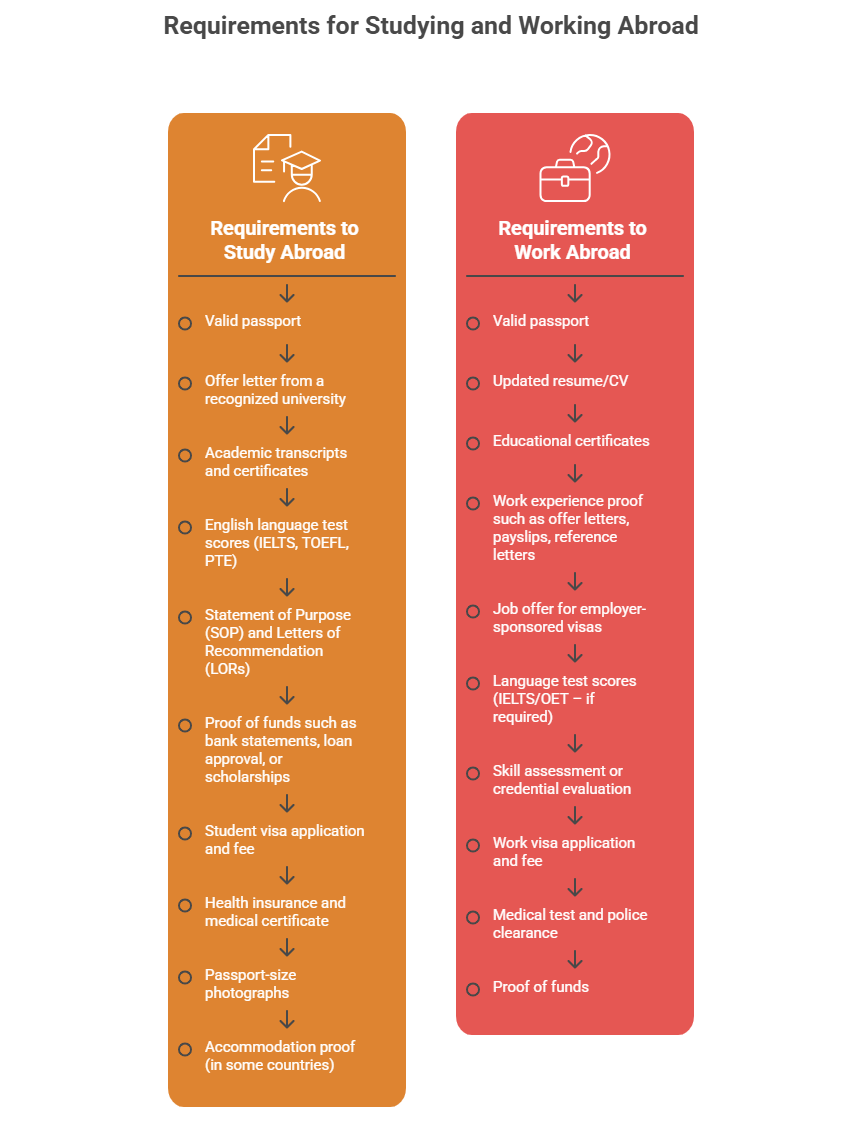
Requirements to Study Abroad
To study abroad, you need academic qualifications, admission to a university, and a student visa. Most countries have similar requirements.
Basic Requirements:
- Valid passport
- Offer letter from a recognized university
- Academic transcripts and certificates
- English language test scores (IELTS, TOEFL, PTE)
- Statement of Purpose (SOP) and Letters of Recommendation (LORs)
- Proof of funds such as bank statements, loan approval, or scholarships
- Student visa application and fee
- Health insurance and medical certificate
- Passport-size photographs
- Accommodation proof (in some countries)
*Willing to study in abroad? Take help from Y-Axis for end-to-end support from
Requirements to Work Abroad
To work abroad, you need relevant work experience, skills, and a valid job or eligibility under immigration programs.
Basic Requirements:
- Valid passport
- Updated resume/CV
- Educational certificates
- Work experience proof, such as offer letters, payslips, and reference letters
- Job offer for employer-sponsored visas
- Language test scores (IELTS/OET – if required)
- Skill assessment or credential evaluation
- Work visa application and fee
- Medical test and police clearance
- Proof of funds
*Want to work in abroad? Contact Y-Axis for complete guidance
Work Visa Options After Completing Studies Abroad
After completing your studies abroad, you can apply for a work visa or a stay-back visa to gain job experience. Many countries allow international students to stay and work for a limited time after graduation. During this period, you can find a full-time job related to your field. Once you get a job, you may switch to a long-term work visa or apply for Permanent Residency (PR). Countries like Canada, the UK, Australia, Germany, and Ireland provide such options with different durations. This pathway helps students build their careers, earn money, and improve their chances of settling abroad in the future.
*Are you planning to migrate abroad? Contact Y-Axis, the world’s No. 1 overseas immigration consultancy, to seek expert guidance!
FAQs
Is it better to study abroad or work abroad?
Studying abroad is usually better for freshers because it offers a smoother and more structured visa process. It gives you time to adjust to a new country, understand the culture, and build connections through universities. You also gain a degree that is recognized locally, which improves job chances. On the other hand, working abroad is ideal for experienced professionals who already have skills. It allows you to start earning immediately, grow faster in your career, and in many cases, reach Permanent Residency (PR) quicker without spending money on education.
Can I get PR faster through study or work abroad?
Working abroad usually offers a faster path to Permanent Residency (PR), especially if your job is in demand in that country. Many countries have direct PR pathways for skilled workers, which can reduce waiting time. However, studying abroad can also lead to PR, but it takes more time. You first complete your studies, then work on a post-study work visa, and later apply for PR. This route is longer but can be safer for freshers who need local education and work experience before applying for PR.
Can freshers go abroad for work directly?
Freshers may find it difficult to go abroad for work directly because most employers prefer candidates with some work experience. Many countries also have strict work visa rules that require skills and experience. Without these, getting a job offer can be challenging. That is why studying abroad is often a better option for freshers. It allows them to gain local education, build skills, and improve their chances of getting a job after graduation. This pathway is more structured and increases the chances of long-term settlement.
Which countries are best for study abroad?
Countries like Canada, the UK, Australia, and Germany are among the best choices for studying abroad. They offer high-quality education, globally recognized degrees, and many courses in English. These countries also provide post-study work visas, which allow students to stay back and gain work experience after completing their studies. In addition, they have good job markets and strong support systems for international students. Choosing the right country depends on your course, budget, and future career goals.
Which countries are best for working abroad?
Canada, Australia, Germany, and the UK are popular choices for working abroad because they have a high demand for skilled professionals. These countries offer good salaries, better work-life balance, and strong career growth opportunities. Many of them also have clear pathways to Permanent Residency (PR), especially for workers in fields like IT, healthcare, and engineering. However, getting a job in these countries can be competitive, so having the right skills and experience is very important for success.
Do I need IELTS for study and work abroad?
Yes, most countries require English language test scores like IELTS, TOEFL, or PTE for both study and work abroad. For study visas, these tests are important to prove that you can understand and communicate in English during your course. For work visas, language tests may also be required, especially in countries like Canada, Australia, and the UK. The required score depends on the country, course, or job role. Some universities or employers may waive this requirement if you studied in English, but this is not always guaranteed.
Can I work while studying abroad?
Yes, most countries allow international students to work part-time while studying. This helps students manage their daily expenses and gain some work experience. Usually, students can work up to 20 hours per week during academic sessions and full-time during holidays or breaks. The exact rules depend on the country and visa conditions. While part-time jobs may not cover all expenses, they can reduce financial pressure and improve your skills. It also helps students understand the local work environment and build connections for future job opportunities.
What is a post-study work visa?
A post-study work visa allows international students to stay in the country after completing their studies and work full-time. This visa is very important because it helps students gain local work experience, which is often required for long-term settlement. During this period, students can find jobs related to their field of study and improve their career prospects. Many countries offer this option with different durations. It also increases the chances of getting Permanent Residency (PR) later, as local work experience is highly valued by immigration systems.
Is it easy to get a job after studying abroad?
Getting a job after studying abroad depends on several factors such as your skills, course, work experience, and demand in the job market. Studying in the same country improves your chances because employers prefer candidates with local education and some knowledge of the work environment. However, getting a job is not guaranteed, and competition can be high in some fields. Choosing the right course and building strong skills during your studies can improve your chances of getting a good job after graduation.
Do I need a job offer to work abroad?
In most cases, yes, a job offer is required to work abroad, especially for employer-sponsored work visas. The employer must be willing to hire you and sometimes sponsor your visa. However, some countries offer immigration programs where you can apply without a job offer based on your skills and qualifications. These are usually points-based systems. Having a job offer increases your chances of visa approval and makes the process easier. It also provides financial security when you move to a new country.
What is the minimum experience required to work abroad?
Most countries require at least 1 to 3 years of work experience to apply for work visas. This is because employers prefer candidates who already have practical knowledge and skills. The exact requirement may vary depending on the country, job role, and visa type. Highly skilled professionals may get opportunities with less experience, but in general, having more experience increases your chances of getting a job abroad. Work experience also plays an important role in immigration programs that use a points-based system for selection.
Can I switch from study visa to work visa?
Yes, many countries allow international students to switch from a study visa to a work visa after completing their education. This usually happens through a post-study work visa, where students can stay and find a job. Once you secure a full-time job, you can apply for a long-term work visa or employer-sponsored visa. This pathway is common in countries like Canada, the UK, and Australia. It helps students gain local work experience and makes it easier to settle abroad in the long run.