What are the most in-demand Jobs in Germany for the Next 10 years?
The most in-demand jobs in Germany in the next 10 years will likely be found in the Healthcare, IT and Software, engineering, and skilled trades sectors. Additionally, sectors like Finance and Accounting, Logistics and Supply Chain, and Renewable Energy are expected to see more job opportunities due to the rising digital transformation. Job roles related to digital marketing, elderly care, and sustainability will have better employment prospects. The aging population, innovation and research-driven environment, and the focus on renewable energy and sustainability are some of the major factors contributing to these sectors' growth.
*Want to work in Germany? Let Y-Axis help you with the process.
List of high-demand jobs in Germany in the next 10 years
According to recent statistics, Germany currently has around 628,000 job vacancies. The average annual salary offered in Germany is around €51,876. Engineering, IT, technology, and Healthcare sectors will have more job vacancies in the coming 10 years.
The table below has the most in-demand jobs in Germany for the next 10 years:
|
Sector |
Job Role |
|
Software Developers |
|
|
Data Scientists |
|
|
Cybersecurity Experts |
|
|
Cloud Computing Specialists. |
|
|
Mechanical Engineers |
|
|
Electrical Engineers |
|
|
Civil Engineers |
|
|
Wind Turbine Engineers. |
|
|
Nurses |
|
|
Doctors |
|
|
Solar Energy Technicians |
|
|
Wind Turbine Engineers |
|
|
Energy Consultants |
|
|
Supply Chain Managers |
|
|
Warehouse Managers |
|
|
AI Specialists |
|
|
Biotechnology Researchers |
Also, read...
3 Million Jobs in Germany Over the Next Decade: Job Outlook and Work Visa Options
Top Cities for In-Demand Jobs in Germany
-
Berlin – IT, Startups, AI, Data Science
-
Munich – Engineering, Automotive, AI
-
Hamburg – Logistics, Supply Chain
-
Frankfurt – Finance, FinTech
-
Stuttgart – Manufacturing, Robotics
Most Sought-After Skills in Germany in the Coming Years
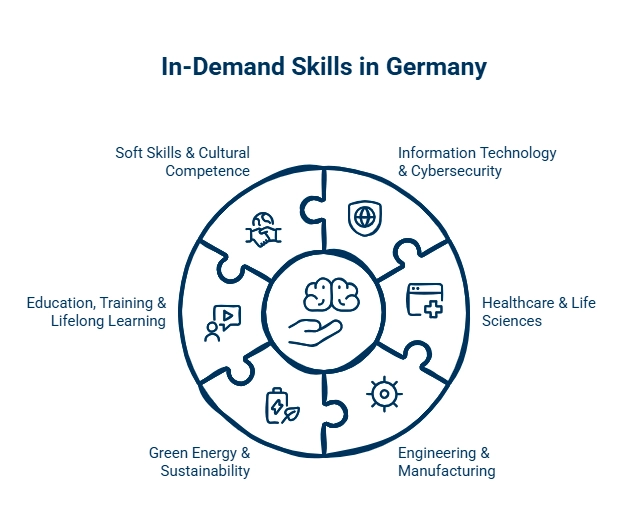
In the coming years, some of the most sought-after skills in Germany will include Tech, engineering, healthcare, etc., problem-solving, analytical, and communication skills.
The table below has a complete list of in-demand skills that will be the most sought-after skills in Germany:
|
Sector |
Skills |
|
Cybersecurity (network security, ethical hacking, GDPR compliance) |
|
|
AI & Machine Learning (Python, TensorFlow, NLP) |
|
|
Cloud Computing & DevOps (AWS, Azure, Docker, Jenkins) |
|
|
Data Science & Analytics (SQL, Tableau, Hadoop) |
|
|
Doctors & Nurses (general and specialized care) |
|
|
Biotech & Pharmaceutical Research |
|
|
Clinical Trials & Medical Technology |
|
|
Robotics & Automation (mechatronics, industrial automation) |
|
|
Electric & Sustainable Mobility (battery tech, lightweight materials) |
|
|
Renewable Energy Engineering (wind, solar, hydrogen) |
|
|
Environmental Consulting (carbon footprint reduction) |
|
|
Sustainable Construction |
|
|
Circular Economy & Waste Management |
|
|
E-learning Content Creation |
|
|
Vocational Training Program Design |
|
|
Lifelong Learning Coaching |
|
|
German Language Proficiency (B1 level or higher) |
|
|
Adaptability & Emotional Intelligence |
|
|
Critical Thinking & Time Management |
*Are you looking for step-by-step assistance with German immigration? Contact Y-Axis, the world’s No. 1 overseas immigration consultancy, for end-to-end assistance!
FAQs
Can foreigners get jobs in Germany without speaking German?
Yes, foreigners can work in Germany without speaking German, especially in IT, engineering, startups, hospitality, and multinational companies. English is commonly used as the working language in global organisations. However, learning basic German improves career growth and long-term settlement opportunities.
Which jobs in Germany are English-speaking?
English-speaking jobs in Germany are most common in IT, software development, data science, engineering, digital marketing, finance, hospitality, and research roles. Startups and international companies primarily operate in English, especially in cities like Berlin and Munich.
Which websites are best for finding jobs in Germany for foreigners?
The best job portals for foreigners include LinkedIn Jobs, Indeed Germany, StepStone, Glassdoor, EnglishJobs.de, and the Federal Employment Agency. These platforms offer verified listings, visa-friendly employers, and English-language job filters.
Do German companies sponsor work visas?
Yes. Many German employers sponsor work visas and EU Blue Cards for skilled professionals, particularly in IT, engineering, healthcare, and STEM fields. A valid job offer meeting salary requirements is usually sufficient for visa sponsorship.
What qualifications are required to work in Germany as a skilled immigrant?
Skilled immigrants typically need a recognised degree or vocational qualification, relevant work experience, a job offer from a German employer, and eligibility for a work visa or EU Blue Card. Regulated professions may require credential recognition and language certification.
Is Germany good for healthcare professionals from abroad?
Germany offers strong opportunities for doctors, nurses, and healthcare workers due to labour shortages. Most roles require qualification recognition and German language skills, but employers often provide paid language training and relocation assistance.
What is the average salary in Germany for professionals?
Average salaries in Germany depend on role and experience. Skilled professionals earn between €45,000 and €85,000 annually, while senior IT specialists, engineers, and sales managers can earn €100,000+ per year.