What are the Most in-Demand Jobs in Canada for the Next 10 years?
Healthcare, IT, skilled trades, education, construction, etc., will likely have some of the most in-demand jobs in Canada for the next 10 years. Job roles such as Registered Nurses, Software Developers and Engineers, Electricians, Construction Managers, Financial Advisors, and Early Childhood Educators (ECEs) are projected to be in high demand in the coming years. Canada has a growing demand for skilled foreign professionals due to technological advancements, economic growth, an aging population, etc.
*Want to work in Canada? Let Y-Axis help you with the process.
Top 10 High Demand Jobs in Canada in the next 10 years
Canada has more than 500,000 job vacancies across different sectors, with in-demand job roles ranging from teachers to accountants, registered nurses, software engineers, IT professionals, etc. Over the next decade, sectors such as Healthcare, IT and engineering, Finance and accounting, Education, skilled trades, etc., will have many job vacancies.
The table below has the list of the top 10 in-demand jobs in Canada in the next 10 years:
|
Sector |
Job Role |
|
Healthcare |
Registered Nurses (RNs) |
|
Personal Support Workers (PSWs) |
|
|
Pharmacists |
|
|
Dentists |
|
|
Medical Laboratory Technologists |
|
|
Technology |
Software Developers and Engineers |
|
Cybersecurity Specialists |
|
|
Data Analysts and Scientists |
|
|
Web Developers |
|
|
Network and Cloud Administrators |
|
|
Skilled Trades |
Electricians |
|
Welders |
|
|
Heavy Duty Equipment Mechanics |
|
|
Education |
Teachers |
|
Educational Assistants |
|
|
University Professors |
|
|
Early Childhood Educators |
|
|
Accounting & Finance |
Financial Analysts |
|
Accountants |
|
|
Financial Controllers |
|
|
Financial Advisors |
|
|
Accounting Managers |
|
|
Financial Planning & Analysis (FP&A) Managers |
|
|
Payroll Administrators |
*Want to apply for jobs in Canada? Avail Y-Axis Resume marketing services to find the right one.
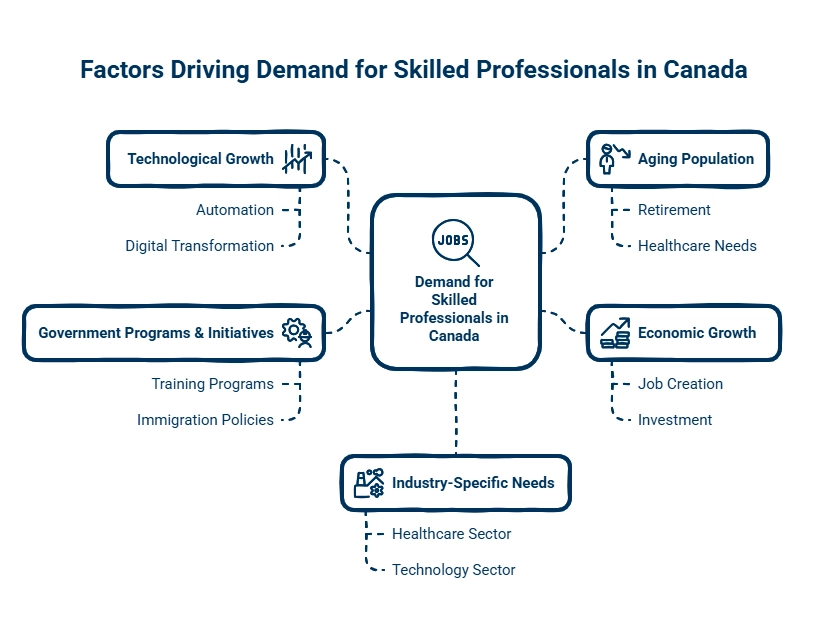
What are the top 5 factors that are driving demand in Canada?
Given below are the top 5 major factors that are creating a huge demand for skilled professionals in the Canadian job market:
- Technological growth
- Aging population
- Economic growth
- Government programs & initiatives
- Industry-specific needs
*Know more about salaries in Canada
Immigration pathways for High Demand Jobs in Canada
| Title | Link |
|---|---|
| How can I migrate to Canada as a Chef? | https://www.y-axis.com/blog/how-can-i-migrate-to-canada-as-a-chef/ |
| How can I migrate to Canada as an AI Specialist? | https://www.y-axis.com/blog/how-can-i-migrate-to-canada-as-an-ai-specialist/ |
| How to migrate to Canada as a Doctor? | https://www.y-axis.com/blog/how-to-immigrate-to-canada-as-a-doctor/ |
| How can I migrate to Canada as a Registered Nurse? | https://www.y-axis.com/blog/how-can-i-migrate-to-canada-as-a-registered-nurse/ |
| How can I migrate to Canada as a Civil Engineer? | https://www.y-axis.com/blog/migrate-to-canada-as-civil-engineer/ |
| How can an IT professional immigrate to Canada? | https://www.y-axis.com/blog/how-can-an-it-professional-immigrate-to-canada/ |
*Are you looking for step-by-step assistance with Canadian immigration? Contact Y-Axis, the world’s No. 1 overseas immigration consultancy, for end-to-end assistance!
FAQs
What are the most in-demand jobs in Canada over the next 10 years?
Canada is expected to face sustained labour shortages across healthcare, technology, skilled trades, construction, education, logistics, and engineering. This demand is driven by an aging workforce, retirements, and economic growth. Many roles will open not just due to expansion but also because existing workers are leaving the workforce. For immigrants and young professionals, this creates long-term career opportunities in sectors aligned with Canada’s labour market and immigration priorities.
Why will Canada need more workers in the coming decade?
Canada’s population is aging rapidly, with a large portion of the workforce nearing retirement. At the same time, birth rates remain low, meaning fewer young workers are entering the labour market. Economic development, infrastructure projects, and expanding public services further increase labour needs. Immigration plays a critical role in filling these gaps, helping Canada sustain economic growth, healthcare services, and social systems over the next decade.
Which healthcare jobs will be most in demand in Canada?
Healthcare demand will remain strong due to an aging population and increased long-term care needs. Roles such as registered nurses, personal support workers, family physicians, medical specialists, physiotherapists, and lab technicians will be highly sought after. Many healthcare workers are also approaching retirement, intensifying shortages. Canada offers licensing pathways, bridging programs, and immigration streams to help internationally trained healthcare professionals enter the workforce.
Are IT and technology jobs in demand long term in Canada?
Yes, technology roles will continue to grow steadily. Canada’s digital economy depends on software developers, data analysts, cybersecurity specialists, cloud engineers, and AI professionals. Businesses across all sectors are adopting digital tools, automation, and data-driven systems. Demand is especially strong in major cities, but remote work has expanded opportunities nationwide. Tech professionals benefit from competitive salaries, global exposure, and strong pathways to permanent residency.
What skilled trades will be in demand in Canada?
Skilled trades are among the most in-demand occupations due to infrastructure development and housing shortages. Electricians, plumbers, carpenters, welders, HVAC technicians, and heavy-duty mechanics are needed across provinces. Many tradespeople are retiring, and fewer young workers are replacing them. These roles offer strong wages, job security, and faster entry into the workforce, making them attractive options for immigrants and domestic workers alike.
Which engineering roles will see strong demand in Canada?
Canada will continue to need civil, mechanical, electrical, industrial, and software engineers. These professionals support infrastructure projects, manufacturing, clean energy, transportation, and technology innovation. Urban development and sustainability initiatives are key drivers of demand. While some roles require professional licensing, Canada provides support through bridging programs and immigration pathways for internationally trained engineers to integrate into the workforce.
Will construction jobs remain in demand in Canada?
Yes, construction jobs will stay in high demand due to housing shortages and public infrastructure investment. Construction managers, site supervisors, skilled labourers, and project coordinators are particularly needed. Population growth and urban expansion continue to fuel residential and commercial development. Construction roles often offer competitive wages and quicker employment opportunities, making the sector attractive for newcomers seeking stability and long-term work.
What finance and accounting jobs are in demand in Canada?
Finance and accounting professionals are consistently needed across industries. Accountants, auditors, financial analysts, payroll specialists, and risk managers support businesses, public institutions, and financial services. Regulatory complexity and financial reporting requirements sustain demand for qualified professionals. While Canadian certifications may be required for some roles, international experience is valued, especially in multinational companies and growing sectors.
Are teaching and education jobs in demand in Canada?
Education remains an important sector with steady demand. Early childhood educators, special education teachers, secondary school teachers, and post-secondary instructors are particularly needed. Population growth and increased focus on early learning contribute to demand. Some regions, especially rural and remote areas, face teacher shortages. Provincial certification is required, but Canada offers pathways for internationally trained educators to qualify.
Which jobs are most suitable for immigrants in Canada?
Immigrants are highly sought after in healthcare, IT, engineering, skilled trades, transportation, education, and agriculture. Canada’s immigration system is designed to attract workers who match labour shortages. Occupations in demand often receive priority under Express Entry and Provincial Nominee Programs, making it easier for skilled immigrants to settle and build long-term careers.
Do in-demand jobs vary by province in Canada?
Yes, labour demand differs by province depending on local industries and demographics. Ontario leads in technology and finance, British Columbia in construction and healthcare, Alberta in energy and trades, and Atlantic provinces in healthcare and transport. Provincial Nominee Programs allow regions to select candidates based on local needs, improving employment and settlement outcomes for immigrants.
Are logistics and transportation jobs in demand in Canada?
Logistics and transportation roles are growing due to e-commerce and supply chain expansion. Truck drivers, delivery drivers, warehouse supervisors, logistics coordinators, and supply chain managers are in steady demand. Canada relies heavily on transportation to support domestic trade and exports. Many of these jobs offer quicker entry into the workforce and strong pathways to permanent residency.
Will green and sustainability jobs grow in Canada?
Yes, Canada is investing heavily in clean energy and sustainability. Jobs in renewable energy, environmental engineering, clean technology, and sustainability management are expected to grow. Climate goals and emissions reduction targets are driving this demand. These roles combine long-term career stability with environmental impact and innovation opportunities.
What is replacement demand, and why is it important?
Replacement demand refers to job openings created when workers retire or leave the workforce. In Canada, replacement demand accounts for a large share of future job opportunities. Even during slower economic periods, employers must replace departing workers to maintain operations. This ensures consistent employment opportunities across sectors like healthcare, education, and skilled trades.
Are hospitality and service sector jobs in demand in Canada?
Yes, hospitality and service roles remain important, especially in urban and tourist regions. Chefs, food service supervisors, hotel managers, and customer service professionals are consistently needed. These jobs often provide quick employment for newcomers and can lead to supervisory or management roles over time.
What language and skill requirements are common for in-demand jobs?
Most in-demand jobs require English or French proficiency, depending on the province. Employers value relevant qualifications, work experience, and practical skills. Regulated professions may require licensing, while others focus on certifications and hands-on experience. Soft skills like communication and adaptability are increasingly important.
Can fresh graduates find jobs in in-demand sectors?
Yes, fresh graduates can find opportunities through entry-level roles, internships, apprenticeships, and graduate programs. IT, healthcare support, engineering, and skilled trades are especially welcoming to new entrants. Employers often prioritize skills and potential, making it easier for graduates to gain Canadian work experience and grow their careers.
Do in-demand jobs improve Canada PR chances?
Yes, working in an in-demand occupation can significantly improve PR prospects. These roles often receive priority under Express Entry category-based draws and Provincial Nominee Programs. Canadian work experience in shortage occupations boosts CRS scores and nomination opportunities.
How does automation affect job demand in Canada?
Automation is transforming jobs rather than eliminating them. While some routine tasks may decline, demand is rising for technical, analytical, and human-centered roles. Jobs requiring creativity, problem-solving, and interpersonal skills are less likely to be automated, creating new opportunities.
Is Canada a good long-term destination for skilled professionals?
Yes, Canada offers long-term stability, strong labour protections, and a high quality of life. Clear immigration pathways, family-friendly policies, and access to healthcare and education make it an attractive destination. With sustained demand for skilled workers, Canada remains a reliable choice for long-term career growth.